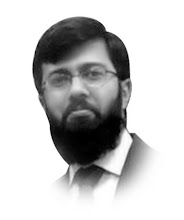
A little insight into my world, through the eyes of one of its inhabitants
My last few posts have been quotations of other artiles. I continue the trend here with something that I got off a Google search.
Cool Desperation
By Saad Shafqat
Nineteen eighty-three, give or take. It was a time before many of the things we now take for granted were around. No fax or email, no satellite TV, definitely no Internet. Zia was in power, Benazir was in exile and Zardari was a nobody. The VCR was still a novelty. Karachi's ethnic riots were still in the future. It was pretty much an innocent time, kissed by angels, nestled in moonbeams. I was eighteen, full of hormones and complexes. Of the holy trinity of Karachi coolness - Grammar School, Sind Club and Phase V - I could lay claim to only one. Undeterred, I took inventory of my assets and launched the struggle to be cool.
It took hardly any brains to figure out that the coordinates of coolness were specified by angreziat on the x-axis and wealth on the y-axis. I took stock of things. I was 6 ft, 0 in, skinny, spoke Urdu like a native, and had a reasonable command of English with an accent that, on most days, could pass for educated subcontinental. The wealth question was more tricky. Sure, we were comfortable and ate well, but we didn't have a flat in London, which would've really helped. Then there were other things that, on further research, turned out to contribute to coolness in important ways, like having a girlfriend, for example.
Girls were hard to come by. Having gone to an all-male school and college, my exposure to girls was limited to relatives, servants, and a neighbor who would look at me but not talk. Since late 1980, I had been nursing a crush on a girl from St. Joseph's whom I had seen during my O level examinations from a distance of approximately 20 feet although I had never spoken to her, called her or seen her again and there was a reasonable chance that she wasn't even aware of my existence. By early 1983, I had managed to learn her name, although little else. Clearly, this wasn't working out and the search for a new girlfriend was in order.
After a careful review of my options I concluded that the party scene promised the best odds for success. I had friends who had gone to Karachi Grammar School which, at least in 1983, represented the leading center of the day for the mixing of the sexes. Some emotional blackmail, admixed with evocations of old times' sakes, and bona fide invitations had been secured. It turned out to be an enlightening experience. The first party I went to was in Lalazar, a rather upscale Karachi mohalla that lies to the left of Moulvi Tamizuddin Khan Road as you go from PIDC towards the port. At the very outset, the word 'party' for me was redefined. Thanks to a clueless upbringing, I had come to expect that parties either involved games and presents, or adults talking to your parents about politics over food you didn't like. What I now saw was unlike anything I had ever experienced.
It was nighttime. From the outside, the party house appeared haunted, enveloped in darkness save for flashes of colored lighting that would erupt every now and then through the windows. Music blared loud enough to wake the dead. (I believe it was 'Physical', by Olivia Newton-John) Inside, an equal mix of boys and girls my age were lounging in various stages of repose, all cool as cucumbers. Almost everybody was smoking. This was still Zia's time under martial law so there was no alcohol, or at least it didn't flow freely enough for me to see. To say that I was 'underdressed' is putting it mildly, but lets not get into that right now. I had previously been briefed by those in the know that the name of the game is to find a beautiful girl and ask her to dance, but I just couldn't do it. Not that the women weren't beautiful; au contraire, they were all ravishingly lovely. It was just that, well, I felt real awkward, you know!
Although demoralized, I disciplined myself to persist with the party strategy for a while. I must have gone to three, maybe four other ones. The basic pattern was always the same: posh locality; spooky lighting with strobe; some combination of Duran Duran and Blondie on a Nakamichi stereo; and boys and girls with impressive (x, y) coordinates on the coolness grid, dancing with flair and, predictably, lounging in various stages of repose. I managed to ask a few girls to the dance floor and mostly received polite yet firm responses ('Too tired', 'Got a headache', 'Sorry, maybe later'). On one occasion, this really nice-looking girl, bless her heart, said yes and we proceeded to dance, but it wasn't like I thought it was going to be. For one, I realized I couldn't move my legs and arms at the same time, which attracted unnecessary attention; for another, I tried to talk to my partner over the music and quickly became hoarse. I tried pursuing the conversation after the number ended, but I was unable to say anything that engaged her attention. Accepting defeat, I finally reflected on the moment: fried vocal cords, high-frequency hearing loss and the spectacle of my motor incoordination - was this the legacy of disco?
Clearly, a girlfriend would have to be secured by some other means. Medical college loomed in my immediate future and, as my first taste of co-education, held the promise of improved gender relations. Meanwhile, I turned my attention to other ways of approaching coolness. It was known among the menfolk that an important part of being cool was nurturing a sporting interest that required a dedicated play area and expensive equipment. I liked sports, but mostly cricket with a tennis ball on the street in front of my house. Searching for coolness, I picked up squash at Gymkhana but didn't get very far. The biggest problem was retrieving serve, but the softness of the ball, which hardly bounced even when you whacked it good, was also very frustrating. On the hypothesis that my game was just not suited to the Gymkhana courts, I convinced a friend to take me to Sind Club, but this proved to be an even bigger disaster. For one, the level of angreziat was a notch higher and I just couldn't blend in. Another problem was that Sind Club housed some of the finest specimens of desi manhood. Fulfilling all known criteria of Karachi coolness, these were young adult Pakistani males who spoke like Londoners, drove the shiniest cars and had looks and physiques fit for GQ. Being in their presence wasn't really helping my self-confidence so, after a few weeks, it was back to cricket. (As an aside, the reunion was a joyous one)
Soon it was March, and time to begin classes at Dow Medical College. After a few weeks at Dow, some of us learnt of admission to the nascent Aga Khan University Medical College, whose classes would not convene until September. I thus found myself in the delicious situation of being a medical student, but having nothing to do for the next 5 months. Dow was a completely different environment that had its own rules about coolness. The main criteria were scholarship and political commitment. You had to be a good student but being active in student politics also helped, and there was nothing like being good at both. Having promised myself not to study a word until September, I had little choice but to strive for coolness through student politics. The annual Dow Medical College Students' Union election was approaching and, judging by how seriously everyone was taking this, it was obvious this was by far the most important thing in the life of the college. Battle lines were clearly drawn: the National Students' Federation (NSF), the one-time student-wing of the Pakistan Peoples' Party, was on the left and the Islami Jamiat-e-Tulaba (IJT), the student-wing of the Jamaat-e-Islami, was on the right. Although the angreziat quotient of the NSF crowd was higher, I had long believed that leftist ideology was actually a form of evil, so siding with NSF was totally inconceivable. Therefore, even though I wasn't exactly at home with the Jamiat camp, I signed on as campaign manager for the IJT-backed candidate for Class Representative, 1st year.
It proved to be a fabulously rich experience. My candidate and I campaigned vigorously by personally visiting over 200 of our classmates (there were about 450 in all), who happened to come from all corners of Karachi. In the process, I found myself challenging some of my most basic assumptions about identity, self-image and, eventually, coolness - and it confused me. My candidate lost the election, as did every one else with a Jamiat ticket. I think it was the negative image that Zia-ul-Haq had managed to impart to all things Islamic. The defeat stung, but not for long. Trying to cultivate an image of detached coolness, some friends and I developed a routine. We would arrive at college mid-morning and one of us would pull out the day's Op-Ed page from Dawn. A discussion steeped in sophistry but generally devoid of insight followed in which juvenile opinions were offered with expert confidence. Needless to add, it was great fun. There was usually a snack - never a proper lunch - around noon-time. I seem to recall samosas and chicken patties with either a banana milkshake or a Pepsi. Afternoons were uniformly devoted to cricket. The highlight of my day would be talking to one or more girls, although this didn't happen every day. Emotionally, I was still recovering from my experience on the dance party circuit. I would come home every day with a profound sense of waste and, eventually, started to feel cool about it. Waste, pessimism, defeat, loss, tragedy, misery, devastation, dejection and melancholy - what concepts, I thought. There was something decadent and romantic about wasting your days that appealed to me.
As all good things must, this idyllic time also came to an end. When I moved over to Aga Khan, the melancholy affectation I had been trying to cultivate was soon washed away in a deluge of coursework. The year was coming to an end and life had finally become serious. For me, the schooling in human perspective begun at Dow was further extended at Aga Khan. Here, then, were people not just from the four corners of Karachi but from all over Pakistan - thoughtful, straightforward, smart as stink and completely at home with academic rigor. They violated all my rules of coolness and their coordinates were all over the map. The x and y axes went out the window. A keenly competitive, pressure-cooker school environment soon developed in which neither angreziat nor wealth mattered, mainly because they didn't help you get good grades which, far and away, became the only currency of coolness. It didn't matter if you had been to Grammar School, or lived in Phase V, or listened to Depeche Mode, or played squash in Sind Club, or spent your summers in London - the only thing that mattered was how well you did on tests. I found myself willing to donate a kidney just to get an 'A', which had quickly become the most valuable commodity in our lives.
You will perhaps understand why all this forced me to re-analyze my thoughts on what it took to be cool in Karachi in 1983. I finally considered the possibility that perhaps nobody, with the possible exception of James Dean, really knew what 'cool' is. However, this was before I had met the woman of my dreams, which also happened in 1983, during my time at Aga Khan. She was sitting alone, far away from the crowd, on a deserted stretch of beach under a cloudless sky on a beautiful December day in Karachi. Her hair blew in the wind and the surf lapped at her feet. Moved to share in her solitude, I walked up to her and she let me stay. As we began talking, her mind soothed all my raging anguish and I was utterly captivated. I remember thinking, there are only two possibilities here: either this woman is totally cool, or coolness is a meaningless concept. To this day, I still don't know which it is, even though I still see this amazing woman from time to time.
As for the dance party scene, I have reconciled to defeat. I just don't get it, yaar.
Available online at: http://www.fc.bus.emory.edu/~hussain_burhani/analects/cool.htm
Cool Desperation
By Saad Shafqat
Nineteen eighty-three, give or take. It was a time before many of the things we now take for granted were around. No fax or email, no satellite TV, definitely no Internet. Zia was in power, Benazir was in exile and Zardari was a nobody. The VCR was still a novelty. Karachi's ethnic riots were still in the future. It was pretty much an innocent time, kissed by angels, nestled in moonbeams. I was eighteen, full of hormones and complexes. Of the holy trinity of Karachi coolness - Grammar School, Sind Club and Phase V - I could lay claim to only one. Undeterred, I took inventory of my assets and launched the struggle to be cool.
It took hardly any brains to figure out that the coordinates of coolness were specified by angreziat on the x-axis and wealth on the y-axis. I took stock of things. I was 6 ft, 0 in, skinny, spoke Urdu like a native, and had a reasonable command of English with an accent that, on most days, could pass for educated subcontinental. The wealth question was more tricky. Sure, we were comfortable and ate well, but we didn't have a flat in London, which would've really helped. Then there were other things that, on further research, turned out to contribute to coolness in important ways, like having a girlfriend, for example.
Girls were hard to come by. Having gone to an all-male school and college, my exposure to girls was limited to relatives, servants, and a neighbor who would look at me but not talk. Since late 1980, I had been nursing a crush on a girl from St. Joseph's whom I had seen during my O level examinations from a distance of approximately 20 feet although I had never spoken to her, called her or seen her again and there was a reasonable chance that she wasn't even aware of my existence. By early 1983, I had managed to learn her name, although little else. Clearly, this wasn't working out and the search for a new girlfriend was in order.
After a careful review of my options I concluded that the party scene promised the best odds for success. I had friends who had gone to Karachi Grammar School which, at least in 1983, represented the leading center of the day for the mixing of the sexes. Some emotional blackmail, admixed with evocations of old times' sakes, and bona fide invitations had been secured. It turned out to be an enlightening experience. The first party I went to was in Lalazar, a rather upscale Karachi mohalla that lies to the left of Moulvi Tamizuddin Khan Road as you go from PIDC towards the port. At the very outset, the word 'party' for me was redefined. Thanks to a clueless upbringing, I had come to expect that parties either involved games and presents, or adults talking to your parents about politics over food you didn't like. What I now saw was unlike anything I had ever experienced.
It was nighttime. From the outside, the party house appeared haunted, enveloped in darkness save for flashes of colored lighting that would erupt every now and then through the windows. Music blared loud enough to wake the dead. (I believe it was 'Physical', by Olivia Newton-John) Inside, an equal mix of boys and girls my age were lounging in various stages of repose, all cool as cucumbers. Almost everybody was smoking. This was still Zia's time under martial law so there was no alcohol, or at least it didn't flow freely enough for me to see. To say that I was 'underdressed' is putting it mildly, but lets not get into that right now. I had previously been briefed by those in the know that the name of the game is to find a beautiful girl and ask her to dance, but I just couldn't do it. Not that the women weren't beautiful; au contraire, they were all ravishingly lovely. It was just that, well, I felt real awkward, you know!
Although demoralized, I disciplined myself to persist with the party strategy for a while. I must have gone to three, maybe four other ones. The basic pattern was always the same: posh locality; spooky lighting with strobe; some combination of Duran Duran and Blondie on a Nakamichi stereo; and boys and girls with impressive (x, y) coordinates on the coolness grid, dancing with flair and, predictably, lounging in various stages of repose. I managed to ask a few girls to the dance floor and mostly received polite yet firm responses ('Too tired', 'Got a headache', 'Sorry, maybe later'). On one occasion, this really nice-looking girl, bless her heart, said yes and we proceeded to dance, but it wasn't like I thought it was going to be. For one, I realized I couldn't move my legs and arms at the same time, which attracted unnecessary attention; for another, I tried to talk to my partner over the music and quickly became hoarse. I tried pursuing the conversation after the number ended, but I was unable to say anything that engaged her attention. Accepting defeat, I finally reflected on the moment: fried vocal cords, high-frequency hearing loss and the spectacle of my motor incoordination - was this the legacy of disco?
Clearly, a girlfriend would have to be secured by some other means. Medical college loomed in my immediate future and, as my first taste of co-education, held the promise of improved gender relations. Meanwhile, I turned my attention to other ways of approaching coolness. It was known among the menfolk that an important part of being cool was nurturing a sporting interest that required a dedicated play area and expensive equipment. I liked sports, but mostly cricket with a tennis ball on the street in front of my house. Searching for coolness, I picked up squash at Gymkhana but didn't get very far. The biggest problem was retrieving serve, but the softness of the ball, which hardly bounced even when you whacked it good, was also very frustrating. On the hypothesis that my game was just not suited to the Gymkhana courts, I convinced a friend to take me to Sind Club, but this proved to be an even bigger disaster. For one, the level of angreziat was a notch higher and I just couldn't blend in. Another problem was that Sind Club housed some of the finest specimens of desi manhood. Fulfilling all known criteria of Karachi coolness, these were young adult Pakistani males who spoke like Londoners, drove the shiniest cars and had looks and physiques fit for GQ. Being in their presence wasn't really helping my self-confidence so, after a few weeks, it was back to cricket. (As an aside, the reunion was a joyous one)
Soon it was March, and time to begin classes at Dow Medical College. After a few weeks at Dow, some of us learnt of admission to the nascent Aga Khan University Medical College, whose classes would not convene until September. I thus found myself in the delicious situation of being a medical student, but having nothing to do for the next 5 months. Dow was a completely different environment that had its own rules about coolness. The main criteria were scholarship and political commitment. You had to be a good student but being active in student politics also helped, and there was nothing like being good at both. Having promised myself not to study a word until September, I had little choice but to strive for coolness through student politics. The annual Dow Medical College Students' Union election was approaching and, judging by how seriously everyone was taking this, it was obvious this was by far the most important thing in the life of the college. Battle lines were clearly drawn: the National Students' Federation (NSF), the one-time student-wing of the Pakistan Peoples' Party, was on the left and the Islami Jamiat-e-Tulaba (IJT), the student-wing of the Jamaat-e-Islami, was on the right. Although the angreziat quotient of the NSF crowd was higher, I had long believed that leftist ideology was actually a form of evil, so siding with NSF was totally inconceivable. Therefore, even though I wasn't exactly at home with the Jamiat camp, I signed on as campaign manager for the IJT-backed candidate for Class Representative, 1st year.
It proved to be a fabulously rich experience. My candidate and I campaigned vigorously by personally visiting over 200 of our classmates (there were about 450 in all), who happened to come from all corners of Karachi. In the process, I found myself challenging some of my most basic assumptions about identity, self-image and, eventually, coolness - and it confused me. My candidate lost the election, as did every one else with a Jamiat ticket. I think it was the negative image that Zia-ul-Haq had managed to impart to all things Islamic. The defeat stung, but not for long. Trying to cultivate an image of detached coolness, some friends and I developed a routine. We would arrive at college mid-morning and one of us would pull out the day's Op-Ed page from Dawn. A discussion steeped in sophistry but generally devoid of insight followed in which juvenile opinions were offered with expert confidence. Needless to add, it was great fun. There was usually a snack - never a proper lunch - around noon-time. I seem to recall samosas and chicken patties with either a banana milkshake or a Pepsi. Afternoons were uniformly devoted to cricket. The highlight of my day would be talking to one or more girls, although this didn't happen every day. Emotionally, I was still recovering from my experience on the dance party circuit. I would come home every day with a profound sense of waste and, eventually, started to feel cool about it. Waste, pessimism, defeat, loss, tragedy, misery, devastation, dejection and melancholy - what concepts, I thought. There was something decadent and romantic about wasting your days that appealed to me.
As all good things must, this idyllic time also came to an end. When I moved over to Aga Khan, the melancholy affectation I had been trying to cultivate was soon washed away in a deluge of coursework. The year was coming to an end and life had finally become serious. For me, the schooling in human perspective begun at Dow was further extended at Aga Khan. Here, then, were people not just from the four corners of Karachi but from all over Pakistan - thoughtful, straightforward, smart as stink and completely at home with academic rigor. They violated all my rules of coolness and their coordinates were all over the map. The x and y axes went out the window. A keenly competitive, pressure-cooker school environment soon developed in which neither angreziat nor wealth mattered, mainly because they didn't help you get good grades which, far and away, became the only currency of coolness. It didn't matter if you had been to Grammar School, or lived in Phase V, or listened to Depeche Mode, or played squash in Sind Club, or spent your summers in London - the only thing that mattered was how well you did on tests. I found myself willing to donate a kidney just to get an 'A', which had quickly become the most valuable commodity in our lives.
You will perhaps understand why all this forced me to re-analyze my thoughts on what it took to be cool in Karachi in 1983. I finally considered the possibility that perhaps nobody, with the possible exception of James Dean, really knew what 'cool' is. However, this was before I had met the woman of my dreams, which also happened in 1983, during my time at Aga Khan. She was sitting alone, far away from the crowd, on a deserted stretch of beach under a cloudless sky on a beautiful December day in Karachi. Her hair blew in the wind and the surf lapped at her feet. Moved to share in her solitude, I walked up to her and she let me stay. As we began talking, her mind soothed all my raging anguish and I was utterly captivated. I remember thinking, there are only two possibilities here: either this woman is totally cool, or coolness is a meaningless concept. To this day, I still don't know which it is, even though I still see this amazing woman from time to time.
As for the dance party scene, I have reconciled to defeat. I just don't get it, yaar.
Available online at: http://www.fc.bus.emory.edu/~hussain_burhani/analects/cool.htm
posted by Farooq Tirmizi at
5:04 PM
0 Comments